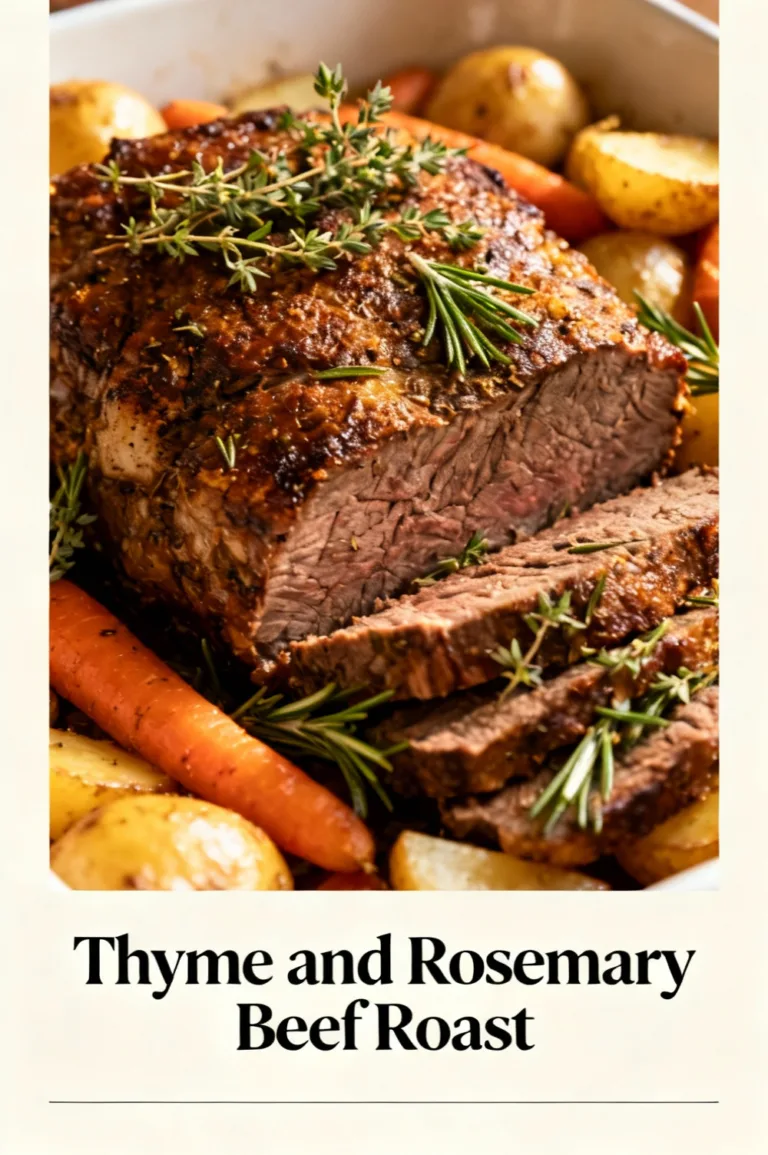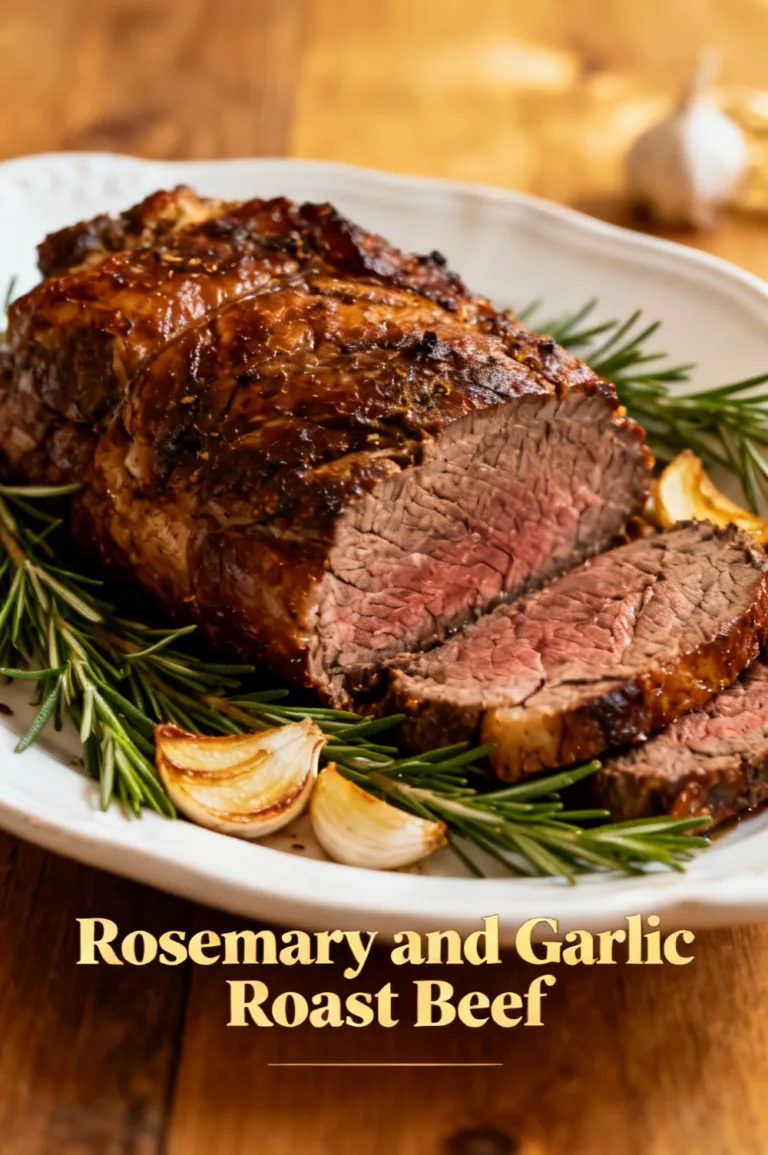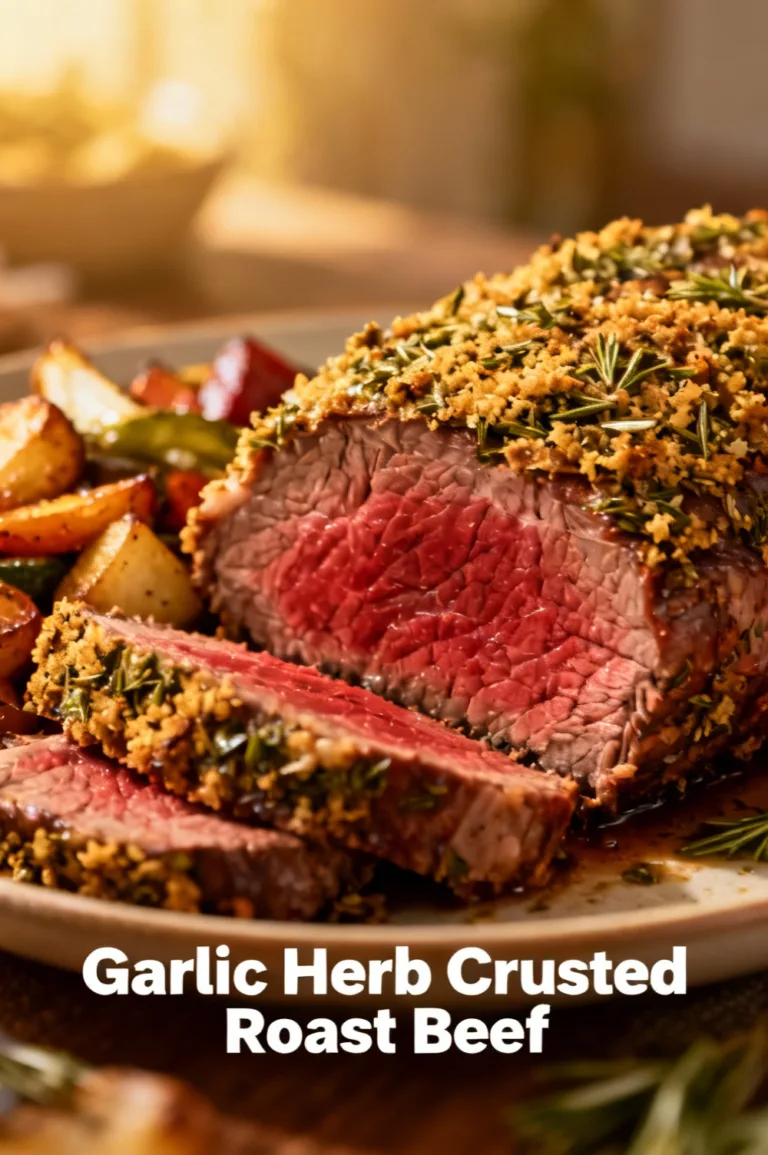
Herb-Infused Roast Beef Delight
Introduction:
Have you ever wondered how a few fresh herbs and a simple technique can transform a humble roast into the centerpiece of a memorable meal while saving you time and boosting flavor? This herb-infused roast beef recipe challenges the idea that exceptional roast beef requires hours of fuss; using a concentrated herb paste and high-heat finish, you get deeply aromatic meat with a perfect crust and tender interior—often in 20–30% less active time than traditional low-and-slow roasts.
Ingredients List:
- 3–4 lb (1.4–1.8 kg) boneless top sirloin, top round, or ribeye roast (choose a cut with some marbling for juiciness; for leaner options, pick top round). Suggestion: if feeding 4–6 adults, 3–4 lb is ideal; for 2–3, choose 2 lb.
- 4 cloves garlic, smashed and finely minced (garlic gives a savory backbone and caramelizes in the crust).
- 2 tbsp fresh rosemary, finely chopped (or 2 tsp dried).
- 2 tbsp fresh thyme leaves, chopped (or 2 tsp dried thyme).
- 1 tbsp fresh parsley, chopped (brightens the flavor).
- Zest of 1 lemon (adds lift and counterpoints richness).
- 2 tsp coarse sea salt (adjust for low-sodium needs).
- 1 tsp freshly ground black pepper.
- 2 tbsp Dijon mustard (helps herb paste adhere and adds tang).
- 2 tbsp olive oil (or avocado oil for higher smoke point).
- 1 cup beef stock or red wine (for deglazing and jus).
- Optional: 1 tsp smoked paprika for warmth; 1 tsp anchovy paste for umami depth (unnoticeable fishiness).
Substitutions and sensory notes: Swap rosemary for oregano or sage for a different aromatic profile; use kosher salt if you prefer milder salt crystals. For a garlic-forward crust, roast extra garlic and mash into the paste. For a deeper crust, add 1 tsp brown sugar (caramelizing sugar).
Timing:
Preparation time: 15–20 minutes (including herb chopping and rooming meat).
Active cooking time: 40–55 minutes (searing + oven roast).
Resting time: 10–15 minutes.
Total time: roughly 65–90 minutes. Compared to traditional low-and-slow roast methods (often 2.5–3 hours), this approach saves up to 60% of cooking time while preserving tenderness by using a rest period and temperature control.
Step 1: Bring the roast to room temperature and preheat
Remove the roast from the refrigerator 30–45 minutes before cooking to take the chill off (this helps even cooking). Preheat oven to 425°F (220°C) for the initial sear/roast phase. Tip: Pat the beef dry with paper towels—moisture is the enemy of a good crust.
Step 2: Make the herb paste
In a small bowl combine minced garlic, chopped rosemary, thyme, parsley, lemon zest, Dijon mustard, olive oil, salt, and pepper. Mix into a spreadable paste. Personalization: adjust herb ratios—if you love rosemary, increase to 3 tbsp; for a brighter profile, add 1 tbsp chopped mint.
Step 3: Sear the roast for a caramelized crust
Heat a heavy skillet or Dutch oven over high heat until shimmering. Add 1 tbsp oil and sear roast on all sides, 2–3 minutes per side, until a deep brown crust forms. Searing locks flavors and creates the Maillard reaction that adds complexity. Tip: don’t move the roast too early—let the crust develop fully.
Step 4: Apply herb paste and roast
Remove pan from heat briefly; brush the herb paste evenly over the seared roast. Transfer to a roasting pan or keep in the Dutch oven and place in the preheated oven. Roast at 425°F for 10–12 minutes to set the crust, then reduce oven to 350°F (175°C) and continue roasting until internal temperature reaches your target (use an instant-read thermometer): 120°F (49°C) for rare, 130°F (54°C) for medium-rare, 140°F (60°C) for medium. Estimate 12–15 minutes per pound after the initial high-heat phase, but temperature is the most reliable indicator. Tip: Because carryover cooking adds 5–8°F, remove roast 5°F below target.
Step 5: Rest and make a quick jus
Transfer roast to a cutting board, tent loosely with foil, and rest 10–15 minutes to let juices redistribute. Meanwhile, deglaze the roasting pan with 1 cup beef stock or red wine, scraping browned bits and simmering 3–5 minutes to reduce slightly; finish with a pat of butter for gloss if desired. Resting is vital—skipping it causes up to 30% more juice loss when slicing.
Step 6: Slice and serve
Slice against the grain into 1/4–1/2 inch slices for tenderness and maximum flavor release. Spoon jus over slices. Serving tip: hold back a small amount of herb paste to dot on each slice for a fresh, raw-herb brightness contrast.
Nutritional Information:
Estimated per 4 oz (113 g) serving of herb-infused roast beef (using top sirloin, herbs, and minimal oil): Calories 260 kcal, Protein ~28 g, Fat ~15 g (saturated fat ~5 g), Carbohydrates ~1–2 g, Sodium variable based on salt added (300–450 mg). Data insight: leaner cuts like top round can reduce calories to ~200 kcal per 4 oz with similar protein. If you use fattier ribeye, expect calories to increase by ~20–30%. For precise tracking, consult USDA FoodData Central entries for your exact cut and adjust for added oils and sauces.
Healthier Alternatives for the Recipe:
- Lower-sodium: reduce added salt to 1 tsp and use low-sodium beef stock; enhance flavor by increasing lemon zest and fresh herbs.
- Lower-fat: choose a lean cut (eye of round or top round) and trim visible fat; sear in a nonstick pan with minimal oil.
- Keto/Paleo: recipe is already compatible; use ghee or avocado oil instead of olive oil for higher smoke point.
- Vegetarian alternative: replicate herb crust on roasted cauliflower or portobello roast—use the same herb paste and roast at 400°F until tender (30–40 minutes for cauliflower head).
- Gluten-free: ensure mustard and stock are certified gluten-free.
Creative swaps: swap red wine jus for mushroom-based vegan jus for a vegetarian plate; add roasted root vegetables tossed in the leftover pan drippings for a one-pan feast.
Serving Suggestions:
- Classic pairing: horseradish cream, roasted garlic mashed potatoes, and steamed green beans. Horseradish adds heat that cuts through beef richness.
- Lighter pairing: arugula salad with shaved Parmesan, lemon vinaigrette, and roasted asparagus for contrast.
- For entertaining: thin slices served as carpaccio with a drizzle of reduced jus and microgreens; place on crusty baguette for open-faced sandwiches.
- Wine pairings: medium-bodied Cabernet Sauvignon or Syrah for rich cuts; Pinot Noir or Malbec for leaner roasts. Non-alcoholic: concentrated beef stock spritzer or elderberry iced tea.
Personal tip: serve with a small bowl of fresh herb chimichurri to let guests customize herb intensity.
Common Mistakes to Avoid:
- Skipping the rest: slicing immediately can cause up to a third of juices to run out; rest at least 10 minutes.
- Overcrowding the pan when searing: this lowers temperature and prevents proper Maillard crust—sear in batches if needed.
- Relying on time instead of temperature: oven times vary; use an instant-read thermometer for doneness accuracy.
- Over-seasoning later: seasoning early helps penetration—save finishing salt for plating if you prefer.
- Cutting with the grain: always slice against the grain to maximize tenderness.
Storing Tips for the Recipe:
- Refrigerator: slice roast and store in an airtight container for up to 3–4 days; whole roast lasts 3–4 days as well. Tip: place a paper towel over slices to absorb excess moisture and preserve texture.
- Freezer: wrap tightly in plastic and foil or vacuum seal; store up to 3 months. Thaw in refrigerator overnight before reheating.
- Reheating: avoid microwave for best texture. Reheat gently in a 300°F oven covered with foil until 120–125°F internal (for medium-rare), or use a hot skillet with a splash of stock; for slices, quickly finish in a hot pan for 30–60 seconds per side.
- Make-ahead: prepare herb paste and chill up to 48 hours; sear roast and keep chilled, then roast day-of for fresher crust.
Conclusion:
This herb-infused roast beef approach blends speed, technique, and aromatic precision to deliver a roast that’s both restaurant-worthy and weeknight-accessible. Key takeaways: dry the roast, use a concentrated herb paste, rely on temperature not time, and always rest. Try the recipe this weekend, leave a comment with your preferred herb swap, or share photos—your variations help others discover new ways to enjoy roast beef. Explore related posts on slow-roasted brisket or garlic-rosemary lamb for complementary ideas.
FAQs:
Q: Can I use frozen roast for this recipe?
A: No—thaw fully in the refrigerator, then bring to room temperature before cooking to ensure even doneness and accurate timing.
Q: How do I know when the roast is done without a thermometer?
A: Thermometers are best, but absent one, use the finger test (firmer = more done) or cut a thin slice to check color—though these are less precise.
Q: Is this recipe safe for make-ahead entertaining?
A: Yes—sear and prepare herb paste ahead; roast and rest before guests arrive. Alternatively, roast fully and reheat gently in the oven while preparing sides.
Q: Can I double the recipe for a larger roast?
A: Yes—timing scales by weight; allow 12–15 minutes per pound after the high-heat phase, but monitor with a thermometer and allow longer rest.
Q: What’s the best way to serve leftovers?
A: Thinly sliced for sandwiches with horseradish mayo, chopped into salads, or reheated gently and served over roasted vegetables—each preserves flavor while reducing waste.
For interactive exploration, try a built-in temperature guide plugin or calculator on your WordPress site to help readers select doneness by weight; link to your related roast and gravy recipes to boost engagement and time on site.
Herb-Infused Roast Beef Delight
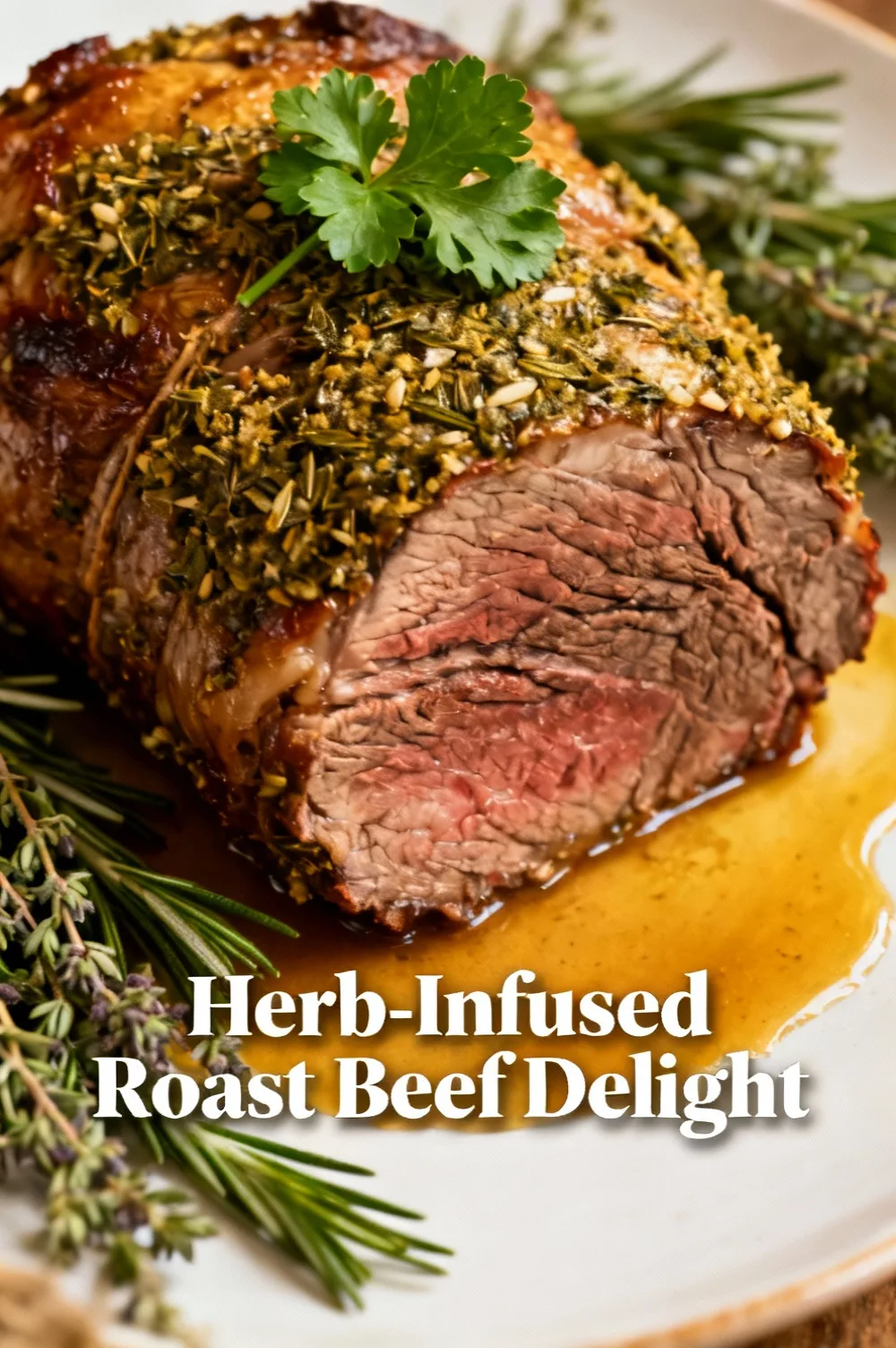
A tender, herb-crusted roast beef flavored with garlic, rosemary and thyme — simple to prepare and elegant to serve.
Ingredients
- 1 (3 lb / 1.4 kg) boneless beef roast (top sirloin or top round)
- 2 tbsp extra-virgin olive oil
- 4 garlic cloves, minced
- 1 tbsp fresh rosemary, finely chopped (or 1 tsp dried)
- 1 tbsp fresh thyme leaves (or 1 tsp dried)
- 2 tsp kosher salt
- 1 tsp freshly ground black pepper
- 1 tsp Dijon mustard
- 1/2 tsp smoked paprika (optional)
- 1 large onion, quartered
- 2 carrots, cut into large chunks
- 1 cup low-sodium beef broth (for pan sauce)
- 1 tbsp unsalted butter (for finishing sauce)
- 1 tbsp balsamic vinegar or 1/4 cup red wine (optional, for deglazing)
Instructions
- Remove roast from the refrigerator 30–60 minutes before cooking to come closer to room temperature. Preheat oven to 450°F (230°C).
- In a small bowl, combine olive oil, minced garlic, chopped rosemary, thyme, Dijon mustard, smoked paprika (if using), salt and pepper to make a paste.
- Pat the roast dry with paper towels. Rub the herb–garlic paste all over the roast, coating evenly.
- Arrange the onion quarters and carrot chunks in the bottom of a roasting pan and place the roast on top, fat-side up.
- Roast at 450°F (230°C) for 12–15 minutes to develop a crust. Then reduce oven temperature to 325°F (165°C) and continue roasting until internal temperature reaches 125–130°F (52–54°C) for medium-rare, about 45–60 more minutes (total cook time will vary by roast size and oven).
- Remove roast from oven and transfer to a cutting board. Tent loosely with foil and rest for 15–20 minutes (internal temp will rise a few degrees).
- Meanwhile, make a quick pan sauce: place the roasting pan on the stovetop over medium heat, add the balsamic vinegar or red wine to deglaze, scraping up brown bits. Add beef broth and simmer until reduced by about half. Whisk in butter and taste for seasoning.
- Slice roast thinly against the grain and serve with roasted vegetables and pan sauce.
Nutrition Information
- Calories: 360 kcal
- Cholesterol: 120 mg
- Sodium: 620 mg
- Carbohydrates: 4 g
- Fiber: 1 g
- Sugar: 2 g
- Protein: 46 g