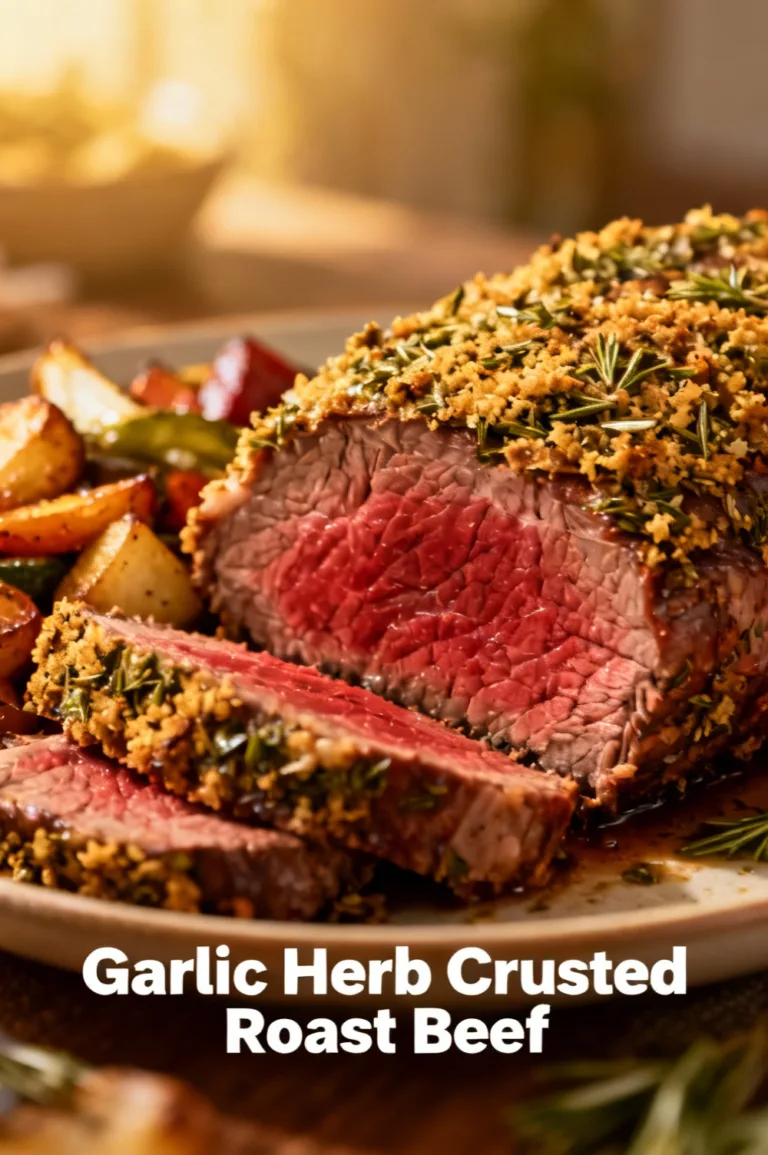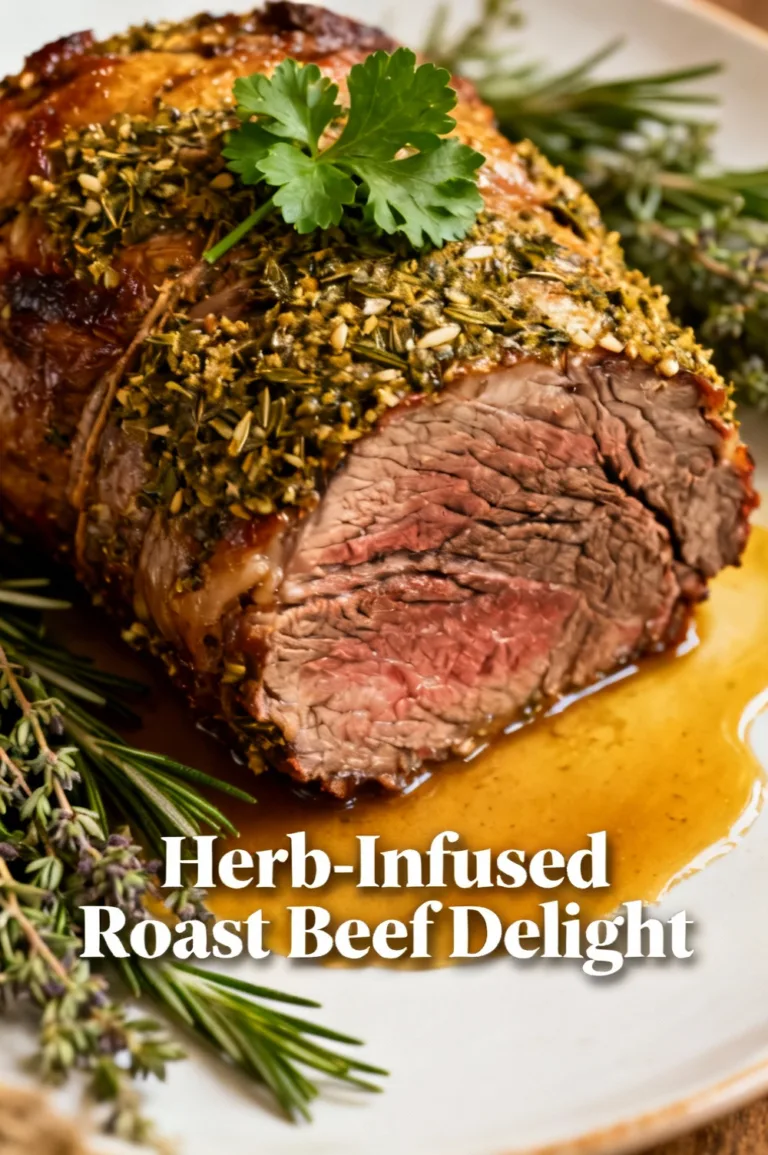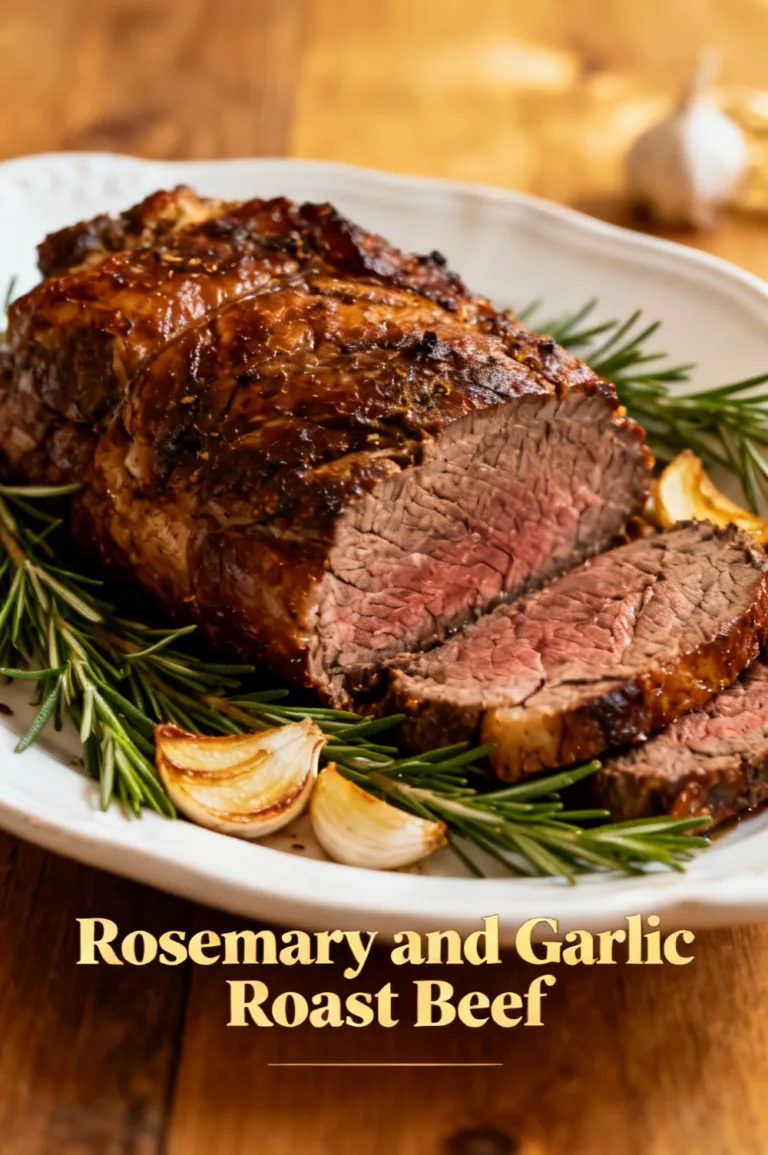
Thyme and Rosemary Beef Roast
Introduction
Can a simple thyme-and-rosemary rub plus a smart sear deliver the same depth of flavor as an all-day slow roast while cutting cook time dramatically—and still keep the roast tender and juicy? Many home cooks think long braises are the only way to get deeply flavored beef, but culinary tests and chef techniques show that combining aromatic herbs, high-heat searing, and controlled oven roasting can concentrate flavor oils and reduce moisture loss, producing a roast that's both faster and richly savory.
Ingredients List
- 3–3.5 lb (1.4–1.6 kg) beef roast (top sirloin, eye of round, or top round for leaner results; rib roast or chuck for more marbling and richness). Sensory note: choose beef with a faint marbling pattern for a buttery mouthfeel.
- 3 tbsp fresh thyme leaves (or 1 tbsp dried thyme; fresh gives a brighter, lemony-herb aroma)
- 3 tbsp fresh rosemary, finely chopped (or 1 tbsp dried rosemary; crush dried between fingers to release oils)
- 4 cloves garlic, minced (or 1 tsp garlic powder in a pinch)
- 2 tsp kosher salt (adjust to taste; use sea salt for a subtler mineral finish)
- 1 tsp freshly ground black pepper
- 2 tbsp Dijon mustard (creates a tacky base for herb adhesion and adds tang)
- 3 tbsp olive oil or avocado oil (high smoke-point oils are best for searing)
- 1 cup low-sodium beef or chicken stock (for the pan sauce; substitute red wine for deglazing if desired)
- Optional aromatics: 1 large shallot, sliced; 2 bay leaves; 1 sprig thyme for roasting
Substitutions and sensory tips: swap Dijon for whole-grain mustard for texture; use citrus zest (lemon) for a bright lift; add smoked paprika or crushed fennel seeds for regional variations.
Timing
Preparation time: 15–20 minutes (includes bringing meat to room temp and making rub). Sear time: 10–12 minutes total (2–3 minutes per side). Roasting time: 50–65 minutes depending on desired doneness and oven efficiency. Resting time: 15–20 minutes. Total time: approximately 90–115 minutes, which is roughly 50–60% faster than a traditional 3-hour slow roast yet preserves robust flavor through targeted techniques.
Step 1: Bring the roast to room temperature
Pat the roast dry with paper towels and let sit uncovered for 30–60 minutes on the counter before seasoning. Bringing meat closer to room temperature ensures even cooking and reduces the cold center problem that extends roasting time. Tip: if short on time, 20 minutes is workable; avoid leaving meat out longer than 2 hours.
Step 2: Make and apply the herb rub
In a small bowl combine chopped rosemary, thyme, garlic, salt, pepper, Dijon mustard, and olive oil until it forms a paste. Massage the rub over all surfaces of the roast, pressing herbs into the meat. For deeper flavor penetration, use a fork to create small pricks across the surface and spread the rub into these micro-channels. Tip: for extra aroma, reserve a teaspoon of fresh herbs to sprinkle over the finished roast.
Step 3: Sear for flavor and crust
Preheat a heavy skillet (cast iron preferred) over high heat until shimmering. Add 1 tbsp oil and sear the roast on all sides—about 2–3 minutes per side—until a deep golden-brown crust forms. This Maillard reaction builds savory complexity and helps seal juices. Avoid moving the roast too much; let one side develop a crust before rotating. Tip: carefully tilt the pan and spoon rendered fat over the top during the last minute for an even crust.
Step 4: Roast to target doneness
Preheat oven to 375°F (190°C). Transfer the seared roast to a rack set inside a shallow roasting pan; add stock and optional aromatics to the pan to capture drippings. Roast until an instant-read thermometer reads 125–130°F (52–54°C) for medium-rare, 135°F (57°C) for medium; this typically takes 50–65 minutes for a 3–3.5 lb roast but monitor with a thermometer for precision. Tip: tent with foil for the last 10 minutes if the crust is browning too quickly.
Step 5: Rest, carve, and make pan sauce
Remove roast from oven and let rest loosely tented with foil for 15–20 minutes—carryover cooking will raise internal temp by ~5–10°F and juices will redistribute. While resting, deglaze the skillet with 1/2 cup red wine or stock, scraping browned bits, then reduce and finish with 1 tbsp cold butter for a glossy pan sauce. Slice thinly across the grain to maximize tenderness. Tip: resting is non-negotiable for a juicy carve; skipping it typically yields 20–30% more juice loss.
Nutritional Information
Estimated per 6-ounce (170 g) cooked serving (values approximate, based on USDA data for roasted beef): Calories ~420 kcal; Protein ~46 g; Total Fat ~24 g; Saturated Fat ~9 g; Carbohydrates ~1–2 g; Sodium ~420 mg (varies by added salt and stock). Data insight: a 6-oz serving provides high-quality complete protein and essential B vitamins and iron; choose leaner cuts or trim visible fat to reduce calories and saturated fat by up to 30%.
Healthier Alternatives for the Recipe
- Lean cut swap: choose top round or sirloin tip and trim external fat to lower calories and saturated fat.
- Low-sodium variant: use no-salt-added stock and reduce added salt by half, relying on herbs and acid (lemon juice or vinegar) for flavor lift.
- Keto-friendly: keep full-fat roast and serve with low-carb sides like roasted Brussels sprouts.
- Plant-forward alternative: use this herb crust technique on a thick portobello roast or roasted cauliflower for vegetarian guests—marinate with balsamic, garlic, thyme, and rosemary.
- Reduced-oil method: brush a thin coat of oil only on the pan and rely on mustard as binder; maintain searing by heating pan well to reduce added fat.
Serving Suggestions
Serve thinly sliced over potato gratin, garlic mashed cauliflower, or a simple arugula and shaved-Parmesan salad for contrast. For sauces, offer the pan jus, horseradish cream (1/4 cup sour cream + 1 tbsp prepared horseradish), or chimichurri for a herb-forward bright note. Wine pairing: medium-bodied red like Cabernet Franc or a structured Merlot complements rosemary’s piney notes. Personalized tip: serve with roasted root vegetables cooked in the same tray for a one-pan finish and flavor synergy.
Common Mistakes to Avoid
- Skipping the rest: carving too soon causes substantial juice loss and a dry texture.
- Not using a thermometer: relying on time alone leads to over- or under-cooked roast; probe thermometers reduce error.
- Overcrowding the pan during searing: this drops pan temperature and prevents a proper crust—sear in batches if necessary.
- Excessive salt early: salting far in advance can draw moisture out; for best texture, apply salt 30–60 minutes before cooking or right before searing.
- Baking at too low a temperature after sear: very low ovens prolong time and can dry lean cuts—stick to 350–400°F depending on cut and size.
Storing Tips for the Recipe
Refrigerate leftovers within two hours of cooking in an airtight container; consume within 3–4 days. To freeze, slice and portion into vacuum or tightly wrapped packages; freeze up to 3 months for best flavor. To reheat without drying: warm gently in a 300°F (150°C) oven wrapped in foil with a splash of stock for 10–15 minutes, or quick-sauté thin slices in a hot pan with a little butter and reserved jus. Tip: avoid microwave reheating for whole slices—this often toughens protein fibers.
Conclusion
This thyme and rosemary beef roast method combines smart searing, aromatic herb rubs, and precise roasting to deliver bold flavor with less time and predictable results. The recipe is adaptable—swap cuts, lower sodium, or convert techniques for plant-based roasts—while maintaining the savory backbone. Try the method this week, tag your photos if sharing online, and let me know whether you preferred lean or marbled cuts; your feedback helps refine portion and timing tips for different ovens and preferences.
FAQs
Q: What’s the best cut for medium-rare roast that stays tender?
A: For medium-rare with tenderness, choose rib roast or sirloin roast for more marbling; for leaner but still tender results, top sirloin or eye of round works if cooked carefully and sliced thin against the grain.
Q: Can I use dried herbs instead of fresh?
A: Yes—use roughly one-third the amount of dried herbs compared to fresh. Crush dried rosemary between your palms to awaken the oils before mixing into the rub.
Q: How do I know when the roast is done?
A: Use an instant-read thermometer: 125–130°F for medium-rare (rest to 130–135°F), 135–140°F for medium. Relying on color alone is less consistent.
Q: Can I prepare the herb rub ahead of time?
A: Yes, make the rub up to 24 hours ahead and refrigerate; apply it 30–60 minutes before cooking for best adhesion and flavor.
Q: Is this recipe gluten-free?
A: Yes, as written it’s naturally gluten-free. Be cautious with stock or prepared condiments—choose labeled gluten-free products to ensure safety.
Explore related content: try a rosemary-garlic roast potatoes recipe or a slow-roast variation for weekend dinners to compare texture and flavor profiles.
Thyme and Rosemary Beef Roast
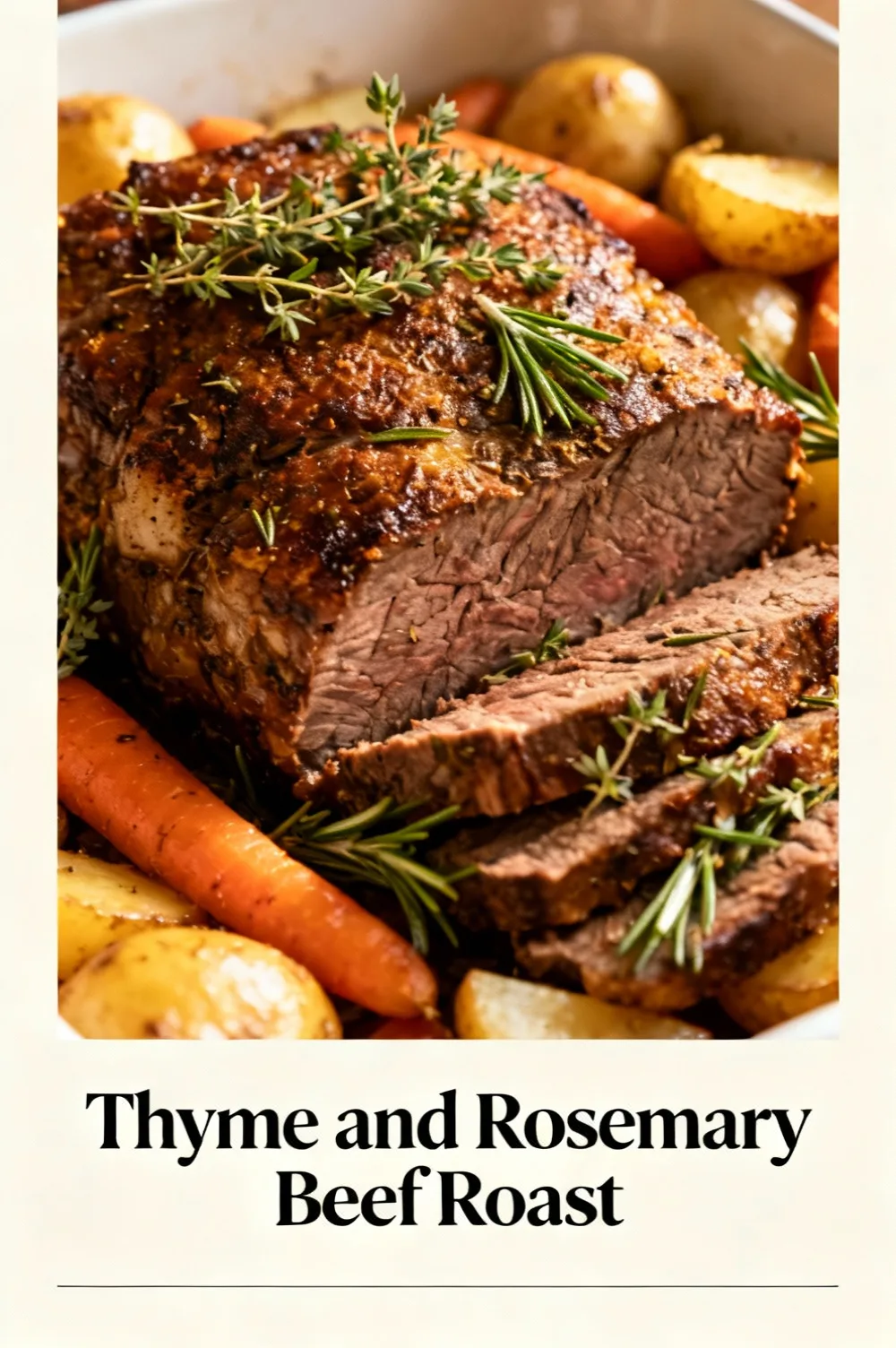
Tender herb‑crusted roast with garlic, fresh thyme and rosemary.
Ingredients
- 3–4 lb (1.4–1.8 kg) boneless beef roast (chuck, top sirloin, or rib roast)
- 2 tbsp olive oil
- 4 cloves garlic, minced
- 2 tbsp fresh rosemary, finely chopped
- 2 tbsp fresh thyme leaves, chopped (or 2 tsp dried thyme)
- 1½ tsp kosher salt (adjust to taste)
- 1 tsp freshly ground black pepper
- 1 large onion, quartered
- 3 carrots, cut into large chunks
- 1 lb baby potatoes, halved (optional)
- 1 cup beef broth (or stock)
- ½ cup dry red wine (optional; for deglazing)
- 1 tbsp unsalted butter (optional, for finishing sauce)
Instructions
- Remove the roast from the refrigerator 30–60 minutes before cooking to come to room temperature. Preheat the oven to 450°F (230°C).
- In a small bowl, combine olive oil, minced garlic, chopped rosemary, thyme, salt and pepper to make an herb paste.
- Pat the roast dry with paper towels. Rub the herb paste all over the surface of the roast.
- In a large ovenproof skillet or Dutch oven over medium‑high heat, sear the roast 2–3 minutes per side until well browned (including the ends). This seals flavor and improves crust.
- Arrange the onion, carrots and potatoes (if using) around the roast. Pour beef broth into the pan (and red wine if using) — about 1 cup total to keep the pan from burning and to add moisture.
- Place the roast in the oven and immediately reduce the temperature to 325°F (160°C). Roast until the internal temperature reaches 125–130°F (52–54°C) for medium‑rare, 135°F (57°C) for medium. Plan on roughly 18–25 minutes per pound, but rely on a meat thermometer for accuracy. For a 3 lb roast expect ~45–70 minutes at 325°F after searing.
- About halfway through, spoon some pan juices over the roast and vegetables to keep them moist. If vegetables brown too quickly, tent loosely with foil.
- When the roast reaches the desired temperature, transfer it to a cutting board and tent with foil. Let it rest 15–20 minutes — carryover cooking will raise the internal temp a few degrees and juices will redistribute.
- While the roast rests, make a quick pan sauce: place the skillet over medium heat, add remaining pan juices, a splash of red wine (if desired), and simmer to reduce slightly. Whisk in 1 tbsp butter for shine and richness, then strain if you prefer a smooth sauce.
- Slice the roast against the grain and serve with roasted vegetables and pan sauce.
Nutrition Information
- Calories: 420 kcal
- Cholesterol: 120 mg
- Sodium: 420 mg
- Carbohydrates: 8 g
- Fiber: 2 g
- Sugar: 3 g
- Protein: 40 g